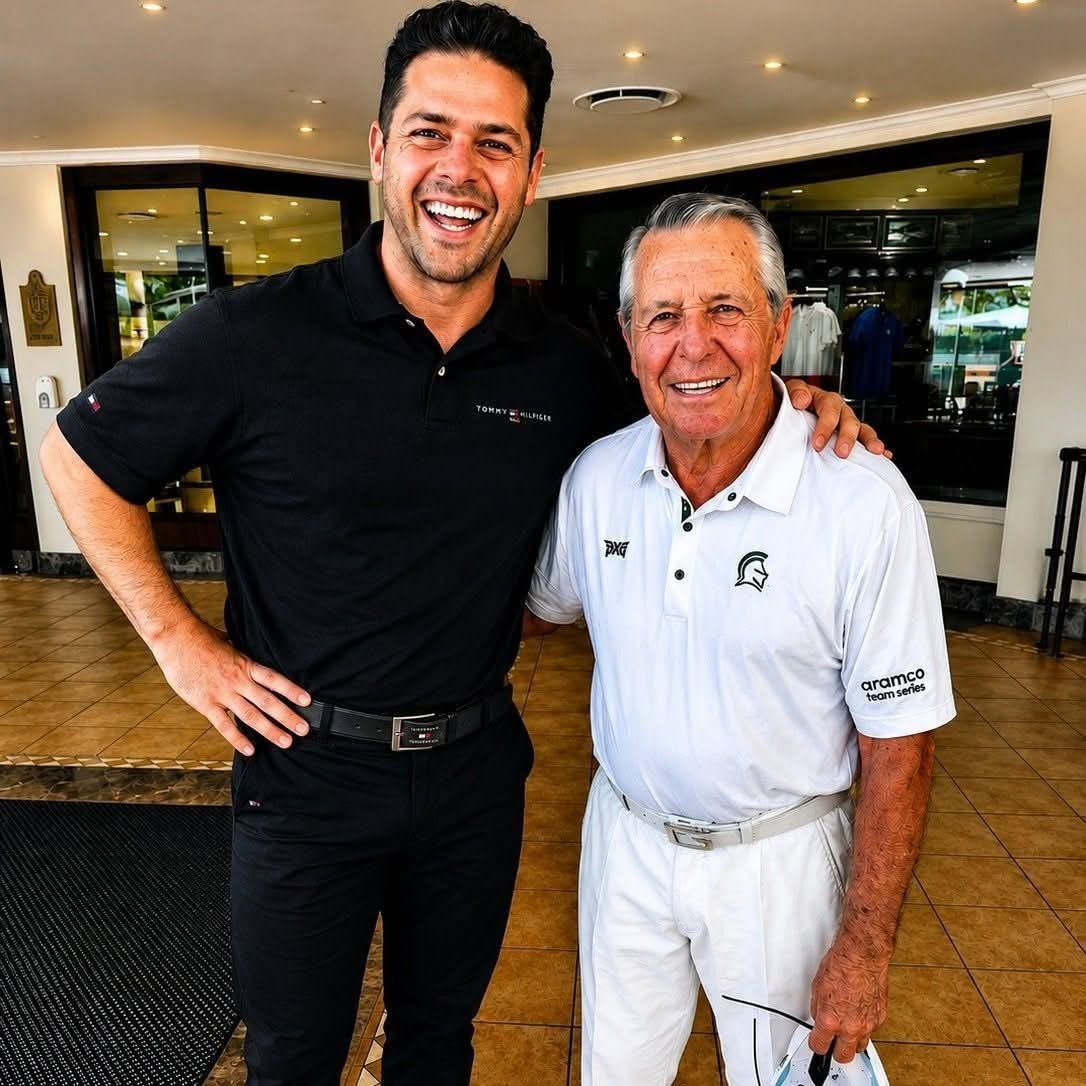
INTRODUCTION: BEFORE YOU JUDGE THE VISION, UNDERSTAND THE PERSON
Every business has a story. Every entrepreneur has a reason for starting. And behind every ambitious vision is a person whose experiences, relationships, successes and failures have helped shape the way they see the world.
Before you decide what We Sell Cars could become, I invite you to understand the person behind it.
I am John, and my story began long before the idea of an online automotive business entered my mind.
It began in Stellenbosch, where I grew up and started discovering the value of an opportunity. It continued through golf, a scholarship to Mauritius, my first experiences in the motor industry and the sacrifices my family made to help me build a future.
At 20, I entered the motor industry. I worked my way up, achieved professional milestones, managed used-car operations and eventually built my own dealership business.
Along the way, I experienced the excitement of success, the pressure of responsibility, the challenges of entrepreneurship and some of the most difficult personal experiences of my life.
I learned that a person can succeed professionally while struggling personally. I learned that family matters more than appearances, that relationships require care and that no achievement can guarantee a life without difficulties.
My father gave me an opportunity when I needed one. My mother supported me. My brother helped me take important first steps and stood beside me through difficult times. The mother of my children remains an important part of our family's story, and my children continue to remind me of what matters most.
I did not get here alone.
Today, I want to take the experience I have gained in the automotive industry and combine it with technology, AI, automation and an online selling system that could help more people participate in buying and selling vehicles.
That ambition has become We Sell Cars.
I do not expect everyone to believe that every idea will succeed. A vision must be tested through execution, customer service, responsible decisions and real results.
But before judging what we are building, I hope you will take the time to understand why we are building it.
This is my story. It is not a claim that I have everything figured out. It is an account of where I began, what I have learned and what I hope to create next.
Because behind the platform is a person. Behind the person is a journey. And behind the journey are people whose contributions deserve to be remembered.
PART ONE: WHERE IT ALL BEGAN
CHAPTER 1: THE LITTLE BOY FROM STELLENBOSCH
Long before there was a business, an online catalogue or a vision for the future of buying and selling cars, there was a young boy growing up in Stellenbosch.
I did not begin with a business plan, a team or a large amount of money. I began with curiosity and a willingness to try.
I sold fruit from the backyard, along with old shoes and clothes. Those were small beginnings, but they introduced me to something that would follow me throughout my life: the ability to recognise an opportunity and try to turn it into something useful.
I was learning how to communicate, how to find people interested in what I had to offer and how to make something happen with the resources available to me.
At the time, I did not know where those early experiences would lead.
Looking back, I can see that business was not initially about owning a showroom or selling expensive vehicles. It was about initiative.
I learned that you do not always need to start with everything you want. Sometimes you begin with what you have, learn as you go and improve along the way.
That lesson remains relevant to me today.
We Sell Cars did not emerge from a lifetime in which everything went according to plan. It emerged from years of learning, working, making decisions and discovering new ways to approach familiar problems.
The little boy from Stellenbosch could not have known exactly where life would take him.
But the willingness to create an opportunity was already there.
CHAPTER 2: GOLF, MAURITIUS AND LOOKING BEYOND HOME
Golf became an important part of my life and opened the door to a golf scholarship in Mauritius, where I spent a year pursuing that opportunity.
For a young person, travelling away from home can represent independence and the possibility of a completely different future.
But it can also teach you what you value.
I missed my family. I missed home. Eventually, I returned to South Africa.
That experience helped me understand that success is not always about going as far away as possible or following every opportunity simply because it is available.
Sometimes you need experience to understand what matters to you.
Golf taught me discipline, concentration, patience and the importance of recovering from mistakes. You cannot change a shot once it has been played. You can learn from it, prepare for the next one and continue.
Business often works the same way.
Not every decision produces the result you hoped for. Not every opportunity develops as expected. The important thing is to recognise what happened, learn from it and decide what to do next.
Golf was one part of my journey, but its lessons would continue long after my time on the course.
CHAPTER 3: MY FATHER — THE MAN WHO GAVE ME MY FIRST OPPORTUNITY
When I started my career in the motor industry, my father lent me his 2007 Opel Corsa Lite.
It had no air conditioning and no power steering. It was not a luxury vehicle, but to me it represented something priceless: an opportunity.
My father even took a taxi to work so that I could use his car.
He sacrificed his own convenience to help me begin building my future.
He did not give me a finished business or guarantee that I would succeed. He gave me a chance to work towards success.
Approximately five months into my career, I earned a commission cheque of around R80,000. It was a significant milestone for a young salesman, and it showed me what hard work and opportunity could produce.
Over the following five years, I bought my parents five brand-new vehicles.
Those purchases meant more to me than the vehicles themselves. They were my way of giving something back to the people who had helped me get started.
I wanted my parents to enjoy some of the rewards of the sacrifices they had made for me.
My father's decision to lend me his car taught me that a single act of support can influence the direction of somebody else's life.
I have never forgotten it.
When somebody gives you an opportunity, remember them when you begin to succeed. And when you have the ability to help somebody else, remember what it felt like when someone helped you.
That principle remains part of the way I think about business and the opportunities I hope We Sell Cars can create.
CHAPTER 4: MY MOTHER — THE SUPPORT BEHIND THE SCENES
My mother played an important role in my journey by supporting me and helping promote my business.
When people look at an entrepreneur, they often see the person whose name is attached to the company. They see the advertisements, the achievements and the ambition.
They do not always see the people who encouraged that person along the way.
Support does not always come with a title or a public announcement. Sometimes it comes through conversations, practical help, encouragement and the willingness to contribute while the future remains uncertain.
My mother's contribution was part of the foundation that helped me keep moving forward.
Building something requires more than a good idea. It requires determination, but it also requires people who care enough to support you when the results are not yet clear.
I will always recognise the role my mother played in my life.
When I think about the future of We Sell Cars, I think about more than growth and technology. I think about the importance of giving people opportunities, appreciating their contributions and remembering the people who helped you become who you are.
Success may carry one person's name, but its foundations are often built by many.
CHAPTER 5: MY BROTHER — SUPPORT THROUGH THE BEGINNING AND THE DIFFICULT TIMES
My brother helped me with my first golf clubs, my first car and my first business.
Those were important steps towards independence, and his support helped me get started.
But his role in my life became especially meaningful during a difficult personal chapter.
My brother had experienced his own divorce approximately three months before I went through mine. When my life changed, he understood some of the emotions and uncertainty I was facing.
He stood beside me for months and continued reminding me of something simple:
“It will get better.”
Sometimes people cannot fix what has happened. They cannot undo the past or remove every difficult feeling.
But they can remain present.
They can remind you that your current circumstances do not necessarily determine your future.
My brother helped me through that period. His support showed me that strength is not always about pretending to be fine. Sometimes it is about accepting help from somebody who understands.
It also taught me that relationships are not measured only by who celebrates your achievements. They are measured by who remains when life becomes difficult.
I will always appreciate my brother's role in my journey, from helping me take my first steps towards independence to standing beside me when I needed support.
PART TWO: BUILDING A CAREER
CHAPTER 6: ENTERING THE MOTOR INDUSTRY AT 20
In December 2011, at the age of 20, I joined General Motors as a salesman.
I was young, ambitious and determined to make the most of the opportunity.
I worked long days, often between 13 and 16 hours, learning the industry and developing my understanding of customers, vehicles, pricing and sales.
I wanted to know more than how to close a deal. I wanted to understand what made customers confident enough to buy, why they hesitated and how a salesperson could make the experience better.
At 21, I became the youngest Platinum Sales Award winner in the company's history at the time. I won the award three consecutive years and was named Employee of the Month for nine consecutive months.
Those achievements reflected the commitment I was putting into my work.
But the experience also taught me that selling a vehicle is about more than persuasion.
Every customer has different needs. Every vehicle has its own market. Every transaction requires communication, product knowledge, negotiation and trust.
I began to understand that the best salespeople do not simply try to convince everyone to buy. They learn to understand the person in front of them.
That lesson would influence my approach to business for years to come.
CHAPTER 7: BECOMING A GROUP USED-CAR MANAGER
At 25, I became a group used-car manager responsible for three branches.
I had progressed from learning the industry as a young salesman to taking responsibility for operations and business performance across multiple locations.
In my first month in the role, profit increased by approximately R600,000.
That experience taught me to look beyond individual transactions.
I had to consider stock, pricing, marketing, staffing, customer demand, operating costs and the processes that influence profitability.
A business does not become sustainable simply because it sells a large number of vehicles. It must also make sound decisions about the vehicles it handles, the prices it charges and the way it serves customers.
I began to understand how every part of a business influences the others.
I also learned that experience becomes more valuable when it can be translated into repeatable processes.
Those lessons later influenced my thinking about We Sell Cars. I wanted to explore whether the knowledge developed through traditional automotive operations could be combined with technology to make the buying and selling process more accessible.
CHAPTER 8: BECOMING AN ENTREPRENEUR
After years in the motor industry, I wanted to build something of my own.
In August 2018, I resigned and began developing my own dealership business from my home in Sea Point.
I had seen the opportunities that could arise from buying and selling vehicles at the right prices, and I wanted to pursue those opportunities independently.
Starting from home meant taking responsibility for the entire operation. I had to find opportunities, build relationships, market vehicles and work out how to make the business sustainable.
After returning from Bali, I opened a warehouse in Epping.
By the second month, I had sold around 50 vehicles.
The business continued to develop, and I later moved into a warehouse approximately three times larger. I expanded into different vehicle categories, from affordable cars to SUVs, luxury vehicles, performance cars and supercars.
At 27, I bought two cars that represented personal milestones: a Ferrari California and the Mercedes-AMG SL65 V12 Biturbo I had dreamed of owning.
Those vehicles reminded me of how far I had travelled from the young salesman who started his career using his father's Opel.
But personal achievements do not mean that life has finished teaching you.
I began asking new questions. How could I reach more customers? How could I make marketing more efficient? How could I manage enquiries without personally handling every conversation? How could technology help me deliver my experience to more people?
Those questions helped lead me towards We Sell Cars.
CHAPTER 9: 10,000 CARS, 50,000 HOURS AND 25,000 CONTACTS
Over more than 15 years in the motor industry, I have sold more than 10,000 vehicles, worked over 50,000 hours and built a network of approximately 25,000 contacts.
These figures represent years of conversations, negotiations, relationships and lessons.
I learned that a network is not simply a collection of phone numbers. It is a collection of people.
I met customers, business owners, suppliers and individuals from different backgrounds. I learned about their interests, their businesses and their needs. I stayed connected and developed relationships that sometimes created opportunities long after the original conversation.
A customer might introduce you to a friend. A contact might connect you with a supplier. A relationship that begins with one transaction might eventually become the foundation of another.
My philosophy became:
“When you stop talking business, you do business.”
To me, this means that genuine relationships are often more valuable than an immediate sales pitch.
It does not mean manipulating people or hiding your intentions. It means being interested in people, treating them fairly and building connections that are worthwhile even when there is no immediate transaction.
I want that philosophy to remain part of We Sell Cars.
The business should not be only about moving vehicles. It should be about connecting people, providing value and earning the trust that brings customers back.
PART THREE: THE LESSONS LIFE TAUGHT ME
CHAPTER 10: THE PERSONAL STRUGGLES THAT CHANGED MY LIFE
From the outside, people often measure success by achievements.
They see the career, the business, the vehicles and the milestones. They do not always see the challenges happening behind closed doors.
I experienced divorce, personal difficulties and periods when I had to confront choices that were not helping me.
I learned that somebody can succeed professionally while struggling personally. You can understand business and still need to learn how to navigate relationships, emotional pressure and change.
One of the hardest chapters was my divorce.
My little boy was only three years old, and my baby girl was just three months old.
When I left, my son asked me, “Dad, where are you going?”
It is difficult to explain the complications of adult life to a child who is too young to understand them.
My children had not chosen the circumstances. They simply needed love, stability and reassurance.
My brother, who had experienced his own divorce a few months earlier, stood beside me and reminded me that life could improve.
Over time, I began to understand that I did not want the difficult parts of my past to become the whole story of my future.
I wanted to learn, take responsibility and become a better father and a better person.
I share this part of my life not because I want sympathy, but because an honest story includes more than the moments that make somebody look successful.
It includes the moments when life demands that you grow.
CHAPTER 11: THE MOTHER OF MY CHILDREN — RESPECT BEYOND THE PAST
Some relationships change over time, but that does not mean everything they once meant disappears.
The mother of my children will always hold an important place in my life because we share two beautiful children.
Our divorce was a difficult chapter. It brought change, painful emotions and lessons that took time to understand.
But I do not want my story to become one of blame.
I recognise the important role their mother plays in their lives and the responsibility we share as parents.
Raising children requires patience, consistency, guidance, love and countless everyday acts of care. It is about helping two young people grow into adults who feel supported, valued and prepared to face the world.
Whatever happened between their parents, the children deserve to know that they are loved and that they do not have to choose sides.
Over time, we have rebuilt a much stronger relationship based on respect and understanding. Today, we respect each other more than ever.
That is something I value enormously.
It has taught me that personal growth is not only about becoming more successful in business. It is also about learning to listen, taking responsibility and recognising the importance of relationships that continue beyond difficult chapters.
I want my children to grow up understanding that people can learn from the past without being trapped by it.
I want them to see that adults can treat one another with dignity, even when life does not follow the plan they once imagined.
Their mother is an important part of their story, and I will always respect her role in it.
CHAPTER 12: WHAT SUCCESS REALLY MEANS TO ME
For many years, success was something I could measure.
Sales. Awards. Profit. Cars. Business growth. Personal milestones.
Those achievements mattered to me, and I am proud of the work behind them.
But life taught me that success is more complicated than a list of accomplishments.
You can own the car you once dreamed about and still have personal challenges to work through. You can build a business and still need to improve your relationships. You can earn money and still discover that some of life's most important problems cannot be solved financially.
I came to understand that the quality of your relationships and the opportunities you create for others are also important measures of success.
My father gave me a chance. My mother supported me. My brother helped me get started and stood beside me through difficult times. The mother of my children remains connected to me through our family, and my children continue to shape the way I think about the future.
I did not get here alone.
That is why I want to use my experience to help create opportunities for other people.
If the knowledge I have accumulated can help someone else find a starting point, then my experience becomes more valuable than the number of vehicles I have sold.
That is one of the principles behind We Sell Cars.
PART FOUR: THE VISION
CHAPTER 13: THE IDEA THAT BECAME WE SELL CARS
After years in the motor industry, I began looking at the business differently.
I understood traditional dealerships, vehicle stock, marketing, sales teams, customer service and the processes required to complete a transaction.
I also understood the challenges.
Marketing costs money. Enquiries require attention. Buyers need answers. Sellers need clear information. Finance and trade-ins can introduce additional steps. And when one person is responsible for everything, growth becomes difficult.
I began asking a different question:
What if we could combine real automotive experience with AI, automation, marketing and technology to make buying and selling vehicles easier for more people?
What if a vehicle owner could access a selling process without having to build an entire dealership?
What if technology could help manage routine enquiries while people concentrated on relationships, decisions and transactions?
What if those tools could become more accessible to people who did not have the resources to build the systems themselves?
That was the thinking behind We Sell Cars.
The ambition was not simply to create another website where people upload vehicle photographs.
It was to develop an online, one-stop car store that could bring together vehicle owners, buyers, marketing, enquiries and selling services through a more integrated process.
The experience comes from years in the motor industry. Technology helps extend that experience. The opportunity is to make the system accessible to more people.
CHAPTER 14: MORE THAN A PLACE TO ADVERTISE A CAR
We Sell Cars is being developed as an online automotive business designed to help buyers and sellers connect through a more integrated process.
For someone selling a car, that may include vehicle presentation, advertising, marketing, customer enquiries, viewing arrangements and assistance in moving a transaction forward.
For buyers, it can mean exploring available vehicles, asking questions and discovering opportunities online.
Depending on the agreed service, We Sell Cars can help with vehicle marketing, AI-assisted enquiries, trade-in and finance enquiries, viewing arrangements, online catalogues, auctions and special deals.
The exact responsibilities, fees and terms must be clearly agreed between the parties.
That matters because convenience should never come at the expense of transparency.
My philosophy is simple:
“The customer is happy, I'm happy — and that's a customer for life.”
I want customers to return because they had a good experience, recommend the service because they trust it and continue building relationships with us.
The goal is not simply to sell a car. It is to build a business that provides value beyond a single transaction.
CHAPTER 15: YOU HAVE THE CAR. WE DO THE SELLING.
One of the central ideas behind We Sell Cars is that people should be able to access a vehicle-selling process without necessarily owning a traditional dealership or buying vehicles themselves.
A vehicle owner may have a car but lack the time or experience to market it properly.
Another person may have sales skills and a network of potential buyers but no vehicle stock.
Someone else may want to explore the automotive industry without the cost of premises, a large team or an independent marketing operation.
The opportunity is to connect these different strengths.
The owner provides the vehicle and agrees to the selling arrangement. We Sell Cars helps provide the agreed marketing and selling process. Technology assists with enquiries and information. People build relationships, help buyers and sellers communicate and support the steps required to move a transaction forward.
You have the car. We do the selling.
The model aims to make participation more accessible, although no vehicle sale or income can be guaranteed.
Every vehicle, customer and transaction is different. Markets change, buyers have individual requirements and costs must be considered.
But the underlying idea is worth exploring: you do not necessarily need to own every asset to create value around it.
Sometimes the opportunity lies in connecting the right people through the right system.
CHAPTER 16: AI, AUTOMATION AND THE POWER OF A SYSTEM
I have experienced what happens when one person tries to manage too many tasks manually.
At times, I have handled around 100 vehicle listings while managing the business through my phone and WhatsApp. Marketing, enquiries, customer conversations and follow-ups can quickly become overwhelming.
There are only so many hours in a day.
If every customer question requires the owner to stop what they are doing and respond personally, growth becomes difficult.
Technology offers another approach.
We Sell Cars has been using AI-assisted conversations and developing automated processes to help answer customer questions and support enquiries.
The ambition is to improve the way information is shared, organise enquiries and help customers receive assistance outside ordinary business hours.
But AI is not magic. It requires accurate information, testing, supervision and continual improvement. Complex questions and important decisions may still need human involvement.
The strongest approach combines technology with real experience and human judgement.
Technology can help scale a process. Experience helps shape it. People remain essential to building trust and completing transactions responsibly.
I want to develop a business that can do more than one person could manage manually without losing the human relationships that make the business worthwhile.
CHAPTER 17: A DIFFERENT WAY TO THINK ABOUT THE AUTOMOTIVE INDUSTRY
Traditional automotive businesses often depend on physical premises, stock, sales teams and established operating structures.
These models can serve customers, but they also require substantial resources.
Online technology creates opportunities to reconsider how some activities are organised.
Could a vehicle owner access marketing support without becoming a marketing expert? Could someone with sales ability explore opportunities without first buying a large number of vehicles? Could customer enquiries be managed more efficiently? Could buyers explore a wider range of vehicles from their phones?
These are the questions We Sell Cars is trying to address.
The ambition is to combine vehicle marketing, customer enquiries, buying and selling support, auctions and special deals within a connected online environment.
Achieving that ambition will require investment, execution, reliable systems and a strong focus on customer service.
It will not happen simply because the idea sounds exciting.
The vision provides a direction. The work determines how far we travel.
CHAPTER 18: AUCTIONS, SPECIAL DEALS AND NEW OPPORTUNITIES
We Sell Cars is exploring different ways to make buying and selling more engaging through auctions, special deals, flash offers, vouchers and other formats.
The aim is to give customers different ways to discover vehicles and consider opportunities while providing sellers with additional ways to reach interested buyers.
Clear terms are essential.
Customers need to understand the price, payment requirements, holding-deposit conditions and any applicable refund arrangements before committing.
A vehicle should not be considered secured merely because someone says they want it. Where a deposit or payment arrangement applies, the agreed rules must be explained and followed.
Convenience must never come at the expense of transparency.
The broader ambition is to create a community where people can discover vehicles, explore special opportunities and connect with sellers through clear processes.
Make the opportunity attractive. Make the terms clear. Treat people fairly.
CHAPTER 19: OPENING DOORS FOR OTHERS
One reason I want to build We Sell Cars is that opportunities in the automotive industry should not necessarily be limited to people who already own large dealerships or have substantial capital.
Some people have sales skills but need a system. Others have networks but need a way to connect with buyers. Some vehicle owners need help reaching the right audience. Aspiring entrepreneurs may want to participate but lack the resources to establish a traditional operation.
We Sell Cars aims to explore ways of helping these people participate through its services and selling processes.
The right opportunity will depend on each person's circumstances, the services available and the terms involved.
No responsible business can guarantee that every participant will succeed or that a particular income is certain.
There are costs, competition, risks and operational challenges.
But shared systems, technology and experience may help more people access opportunities that would otherwise be difficult to pursue.
I want to build something people can use to create opportunities for themselves, rather than a business that depends entirely on me doing everything personally.
CHAPTER 20: THE COMMUNITY — EVERY PERSON COUNTS
A business is not built by technology alone.
It is built by the people who use it, the customers who trust it and the relationships that grow around it.
We Sell Cars has been developing a community of people interested in vehicles, buying and selling opportunities and the broader vision behind the platform.
Reaching milestones such as 800 community members is encouraging because it represents people who have chosen to take an interest in what we are building.
But numbers alone do not make a successful business.
The real questions are whether we help sellers reach buyers, provide accurate information, handle enquiries properly and develop services that genuinely improve the customer experience.
Some people join because they want to buy a car. Others want to sell one. Some are interested in auctions or business opportunities, while others simply want to follow the journey.
Every person has a reason for being there.
A community becomes valuable when its members find real reasons to stay, participate and trust the service.
CHAPTER 21: THE FUTURE WE WANT TO BUILD IN SOUTH AFRICA
The ambition for We Sell Cars extends beyond a handful of transactions or a single online catalogue.
The vision is to develop a connected automotive business that can serve people across South Africa, improve the buying and selling experience and create opportunities for more people to participate.
We want vehicle owners to access selling support, buyers to explore vehicles conveniently and technology to help manage enquiries and routine processes.
The longer-term ambition includes exploring convenient delivery arrangements, with a goal of doorstep delivery within 24 hours after a completed deal where practical.
That depends on vehicle availability, location, documentation, payment or finance approval and delivery arrangements. It is an ambition to work towards, not a guarantee for every transaction.
If the model proves successful in South Africa, there may eventually be opportunities to expand internationally.
That scale remains an ambition to demonstrate, not an established outcome.
Building a major platform requires sound economics, reliable technology, capable people, responsible operations and customer trust.
We Sell Cars is being built in South Africa, with the ambition to help shape the future of buying and selling vehicles.
CHAPTER 22: THE LEGACY I HOPE TO BUILD
When I think about the future, I think about more than the next vehicle or the next sale.
I think about systems that can operate without depending forever on one person doing everything.
I think about creating opportunities for people who may never have had the resources to establish a traditional dealership.
I think about customers who return, sellers who recommend the service and entrepreneurs who discover a way to build something of their own.
And I think about my children.
I want them to understand that life is not always straightforward. People experience difficult chapters, make mistakes, learn lessons and have to decide what they will do next.
I want them to see that the important thing is not pretending the difficult parts never happened.
It is learning from them, taking responsibility and using experience to build something better.
A legacy is not guaranteed because somebody has a big dream.
It must be earned through years of work, decisions, values, relationships and the willingness to keep improving.
That is the kind of legacy I want to work towards.
I want to build something that can grow beyond me, create value for others and continue serving people long after the first chapter has been written.
CHAPTER 23: GRATITUDE — BECAUSE I DIDN'T GET HERE ALONE
When I look back, I see many people who contributed to my journey.
I am grateful to God for the opportunities, lessons and strength to keep moving through difficult times.
I am grateful to my father for lending me his car and sacrificing his own convenience so I could begin my career.
I am grateful to my mother for supporting me and helping promote my business.
I am grateful to my brother for helping me get started and standing beside me through difficult chapters.
I am grateful to the mother of my children for the role she plays in their lives and for the respect and understanding we have rebuilt as parents.
I am grateful to my children, who remind me that life is about more than business achievements.
I am grateful to the mentors, managers, colleagues, friends and customers who helped me learn and grow.
And I am grateful to the people who have trusted We Sell Cars, joined the community, asked questions and given the platform a chance.
Some contributions were large. Others were small. Some people may not even realise how much their support meant to me.
But I remember that I did not get here alone.
Never forget the people who helped you when you were still trying to become the person you wanted to be.
CHAPTER 24: BEFORE YOU DECIDE WHETHER TO BELIEVE
I have shared my achievements because they are part of the experience I bring.
I have shared the difficult chapters because they helped shape the person I have become.
I have shared the family story because no one builds a life entirely alone.
And I have shared the business vision because I believe there is an opportunity to use what I have learned to develop a different way of buying and selling vehicles.
But I do not expect anyone to believe that every ambition is guaranteed to become reality.
Business requires proof, execution, sound decisions, reliable service and the willingness to improve.
A platform must deliver value. An opportunity must be understood. Customers must be treated fairly. Trust must be earned.
That is the responsibility that comes with a vision.
So I invite you to ask questions, understand the services, explore the available vehicles and judge We Sell Cars by the work it does and the results it delivers.
If you want to sell a car, explore the selling process. If you want to buy a car, discover the available vehicles. If you are interested in the business side, learn how the model works and what participation involves.
You do not have to believe in everything today.
But I hope you will take the time to understand what we are trying to build.
A vision becomes more than an idea when people turn it into something useful.
That is the work ahead.
EPILOGUE: THE JOURNEY CONTINUES
From a little boy in Stellenbosch selling fruit, shoes and clothes, to a golf scholarship in Mauritius.
From a young salesman at General Motors, to professional achievements and responsibility for three used-car branches.
From a father's Opel Corsa Lite, to building a dealership from home in Sea Point and opening a warehouse in Epping.
From professional success to personal challenges that changed my understanding of family, responsibility and the meaning of success.
From the sacrifices of my parents and the support of my brother, to the important role the mother of my children continues to play in our family's story.
From years of automotive experience, to the ambition of combining that experience with AI, automation and an online selling system that could help more people.
This is the journey behind We Sell Cars.
It is not a promise that everything will be easy. It is not a guarantee that every ambition will be achieved.
It is an invitation to understand the person, the experience, the purpose and the work that lies ahead.
I know where the journey began. I know the people who helped me reach this point. I know the lessons that shaped me.
Now I want to use those lessons to build something that can serve customers, create opportunities and grow through the trust of the people who choose to become part of it.
The vision is ambitious. The responsibility is real. The journey is underway.
Before you judge the platform, understand the person.
Before you judge the person, understand the journey.
And before you decide what We Sell Cars could become, give yourself the opportunity to understand what we are trying to build.
🇿🇦 WE SELL CARS
The first-of-its-kind online one-stop car store.
The future of buying and selling.
The future isn't coming. We are building it. Right here. Right now. In South Africa.
The Smart Way to Sell Your Car.
Be part of the journey
Explore the vision in action — browse the collection, value your car or start a conversation with the team.